
We started watching Small Prophets last night after seeing it recommended by @herreidjohn.bsky.social. Brilliant mix of comedy, drama and surrealism in a way that’s probably only possible for Brits.
Recent Posts
-
Pen Pals
I’ve seen some pretty artsy skate videos in my day. Stereo Skateboards excelled at this and even the first several Bones Brigade videos had quite a few unusual elements in them that bordered on performance art. Never have I seen anything that mixes live action skateboarding with all sorts of mixed media creations like the Pen Pal series by Jack Hyde animations, though. A stop-motion collage of this free flowing action sport really works. Seamlessly transitioning between actual video footage and hand-drawn animation, Pen Pals shows the fluid nature of the activity.
Jack Hyde Animations – “Pen Pals” w/ Evan Smith (YouTube)
-
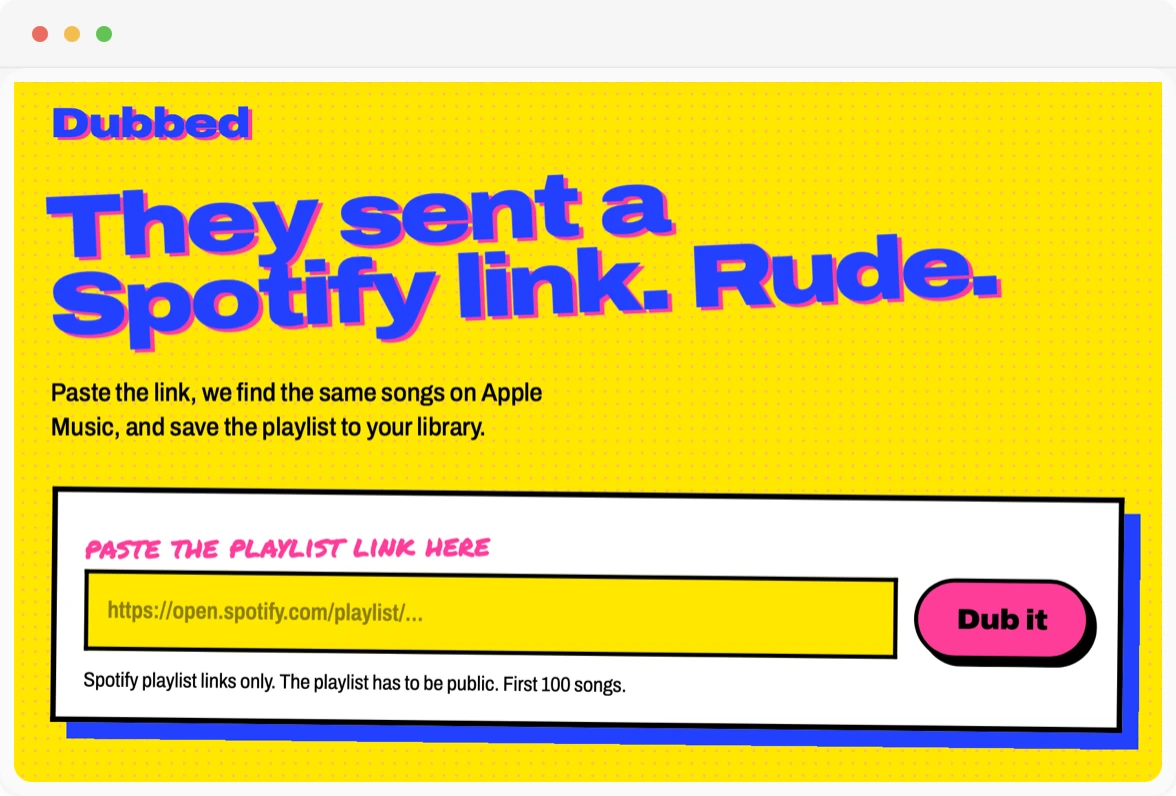
Dubbed.space.fast is an app that will convert a Spotify playlist to Apple Music, while acknowledging the rudeness of sending someone a Spotify playlist.
-
No Pocky for Kitty
Lately I’ve been looking for music with a certain energy. After overdosing on slowcore and more contemplative music, I need something to quicken the pulse.
I’ve come back to an album that was one of my favorites as a teenager: No Pocky for Kitty by Superchunk. It’s a powerful testament to youthful exuberance, mostly power chords and yelps. Superchunk’s early period was pop punk with a hearty dose of rock to even things out. It’s subversive and assertive while honestly acknowledging a certain lack of confidence.
As usual, the production from Steve Albini is sublime. I had my issues with the guy, but he could produce a rock record like no other. The sound is raw and real, all unbridled enthusiasm, orginally bottled and sold on wax and now streamed over underground cables.
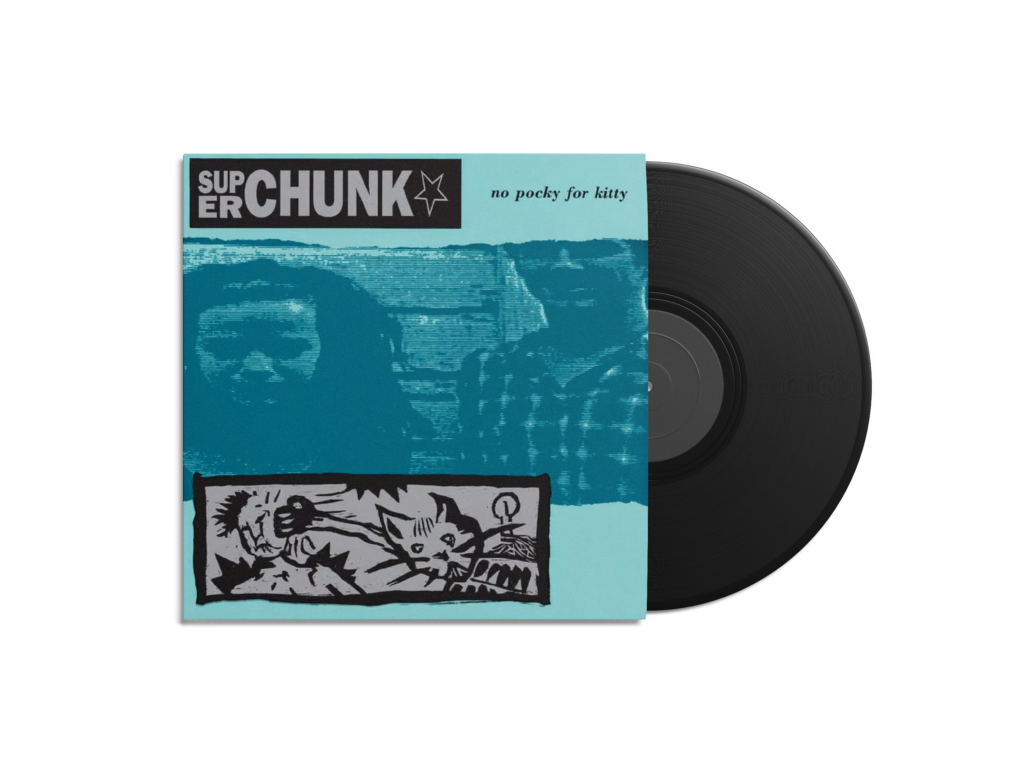
Superchunk – No Pocky for Kitty (Bandcamp)
-
Interesting to see this skeet from @toni.bsky.team.
-
The Shape of Sin
Valerie Pavilonis writes about how mentions of sin seem to be increasing, even in secular spaces.
But it looks like sin might be in the zeitgeist. The Marxist writer Tyler Austin Harper recently wrote a piece on how “sin” is pretty much the only word to describe some of the unsettling, I-know-it’s-wrong-but-can’t-quite-say-why stuff that’s happening in AI. “The problem is, I don’t know what else to call it when companies market digital girlfriends to the heartsick and young,” Harper writes. “Or when they hawk robot companions to the lonely and old. Or when a billionaire explains that he intends to sell intelligence—trained on humanity’s stolen intellectual property—back to us as a utility, like electricity or water. These developments are not just wrong. They feel to me like something deeper and darker.”
She also reflects on the the parable of the return of the unclean spirit found in Luke 11:24-26 about the man who was rid of an unclean spirit only to have it return to him with several other unclean spirits. This particular teaching has always puzzled me, but Pavilonis explains her belief about the need, once someone has purged sin, to fill themselves up with the opposite.
I suppose an empty space invites guests of one kind or another.
-
Buy the Dip
Jonathan Hays covers the effects of anticipating that AI is going to make software development jobs obsolete.
And yet, the message we’re sending to the next generation is that software development may no longer be a viable career. Students are reconsidering computer science degrees and choosing other fields because they’re worried the jobs they’re preparing for won’t exist by the time they graduate. I think we’re making a terrible mistake, and the consequences may not become apparent for another four to six years.
I’ve mentioned this before, but I was surprised this year when my youngest son applied to be a part of the accelerated IT program upon entering high school and I found out that they didn’t even have the maximum number of applicants. When my oldest applied for the same program six years ago, not everyone got in.
I think we will need less software engineers in the future, but the need in general will not go away. Getting into software engineering now could be an example of buying during the dip.
Via Manton Reece
-
Frisson
When I got my new tube-based headphone amp/preamp, I got chills when listening to certain music. Apparently, this is phenomena called “frisson.”
Frisson happens when multiple parts of your brain activate at once, especially the areas responsible for processing sound and those tied to emotion and reward. Research shows that people who experience frisson more often tend to have stronger connections between these regions, allowing them to respond more intensely to music. Your body follows that signal as your nervous system activates, your skin reacts, and your heart rate can shift slightly, creating a response that feels immediate and physical while still being rooted in emotion.
→ What Is Frisson? The Science Behind Why Music Gives You Chills
-
Natural Orchestra
My wife related to me that she was glad we use Qobuz for our music streaming service, since she had read it was one of the more ethical services in terms of artist payments. I’m happy to see ethics driving consumer decisions around what services to use.
I remember, in the 90s, some friends telling me not to eat at Wendy’s because Dave Thomas supported “conservative causes.” I read a biography of Dave Thomas. He was an orphan and the main cause he championed was orphanages. As Johnny Depp’s character says in John Waters’ Cry Baby, “orphans have special needs.” Somehow the plight of those without parents became coded as conservative and my friends were definitely against it. After that conversation, I finally felt like I understood the phrase “kneejerk liberal,” which was a fairly common one in those days.
Now, those same friends are on X and Spotify. Daniel Ek, CEO of Spotify, directs a lot of his money and investments into defense tech. Elon Musk, CEO of X, just gave over $100 million to the campaign of disgraced Texas attorney general Ken Paxton, so that corruption could remain the coin of the realm in Texas.
I wonder if this happens as a result of apathy that develops over time.
Jonas Downey writes about people returning to X.
But I’m not here to argue with people making their own personal choices. We live in the reign of oligarch capitalism, and everybody has to make whatever ethical compromises they’re willing to stomach within that system. (Some of y’all have some really questionable stomachs, but I digress.)
I am here to argue that your social media participation has value, and chickening out on this issue is just cowardice wrapped up in excuses.
Downey goes on to relate how, in the case of social media, participation is what gives the network its power and what allows it to generate ad revenue. If everyone stopped posting to X, it would die. Attention and use is currency. It’s our currency to spend however we feel is right. Sometimes, it’s literally the only thing we can do to try and make a difference.